


Looking back at Nicolas Ghesquière’s recent work for Louis Vuitton, a different pattern begins to emerge. Rather than reinventing each collection entirely from the beginning, ideas seem to move from one season into another, changing shape as they enter a new world. Familiar silhouettes return with a different purpose, historical references become something more contemporary, and materials can create an entirely different mood from one collection to the next.
Before Paris Fashion Week SS27 begins, one creative thread feels particularly striking. It starts in Avignon, continues inside the Louvre, and then reaches New York — three very different settings, and three different ways of looking at clothing, character and identity.
CRUISE 2026: CLOTHING AS TRANSFORMATION
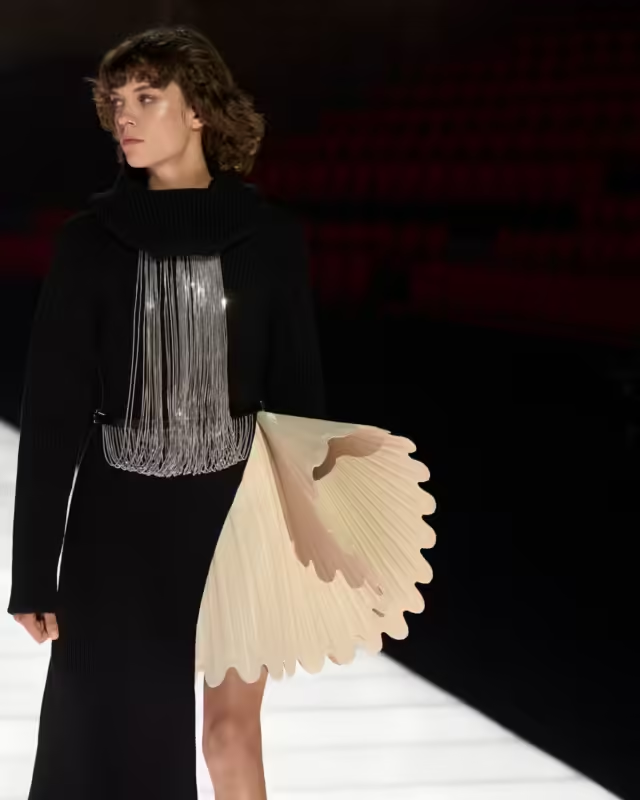
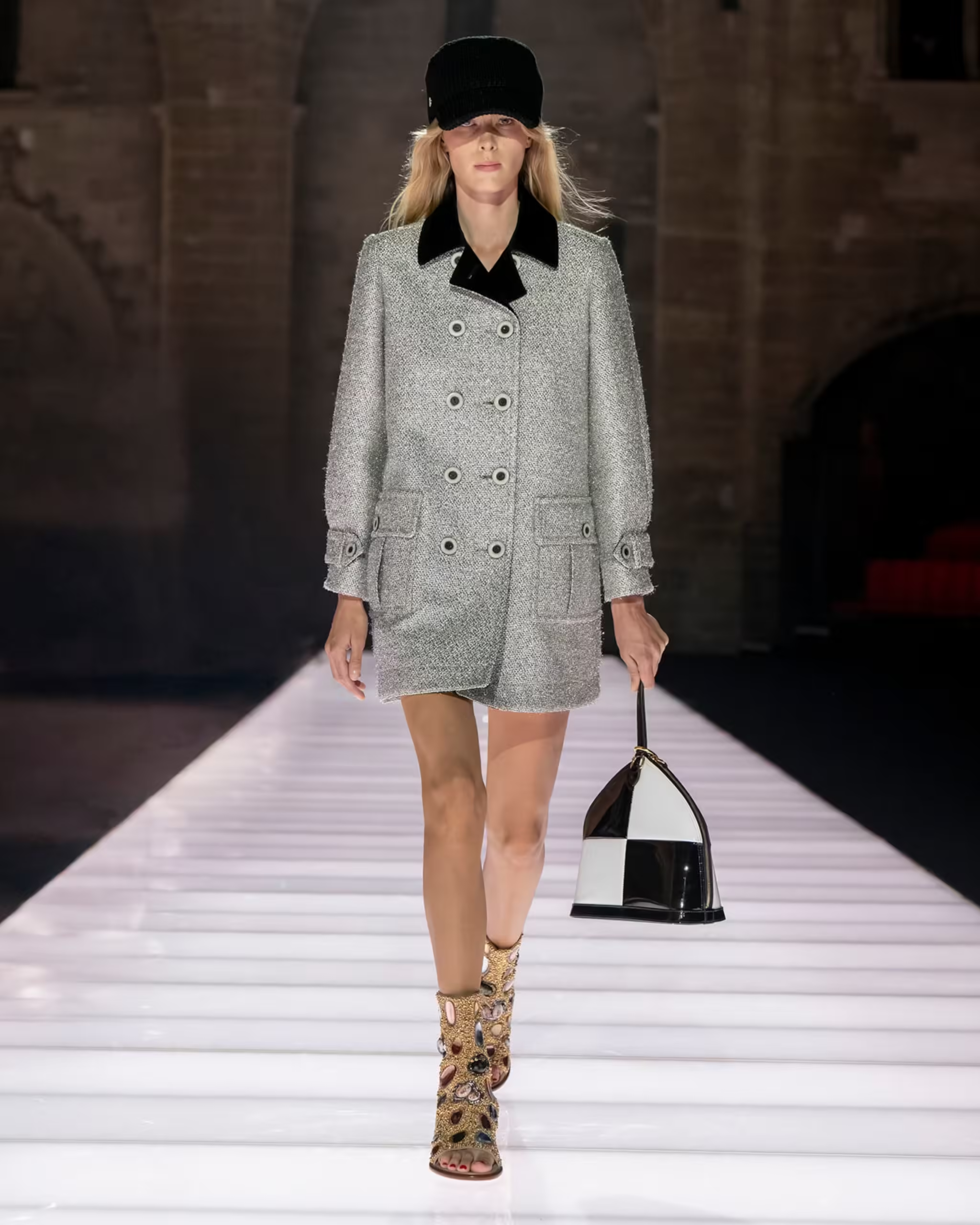
For Cruise 2026, Louis Vuitton travelled to the Palais des Papes in Avignon, staging Nicolas Ghesquière’s collection inside the monumental Gothic palace built in the fourteenth century. With its soaring stone arches, fortress-like walls and vast ceremonial courtyards, the setting carried centuries of history before a single look appeared on the runway. It became more than a location; it became part of the collection’s visual language. Louis Vuitton described the show as a meeting between the Middle Ages and glam rock, bringing together theatrical silhouettes, feminine forms, the Maison’s leatherworking heritage and architectural construction.
What made Cruise 2026 particularly compelling was not simply its historical references, but the physical presence of the clothes themselves. Structured leather, metallic corsets, sculptural collars and embellished surfaces created silhouettes that felt almost protective, as though clothing had become a form of armour. Ghesquière has often spoken about fashion’s ability to transform mood, appearance and character, and this collection embodied that idea almost literally. The garments did not merely dress the body — they changed the way it occupied space, giving each look a sense of strength, ceremony and theatrical presence before the story quietly evolved into something entirely different.

The Story Unfolds Differently
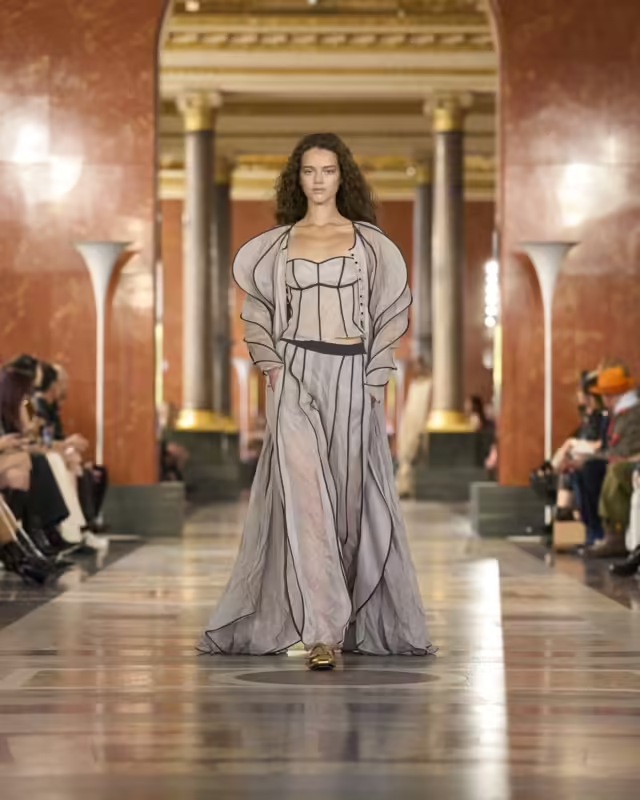
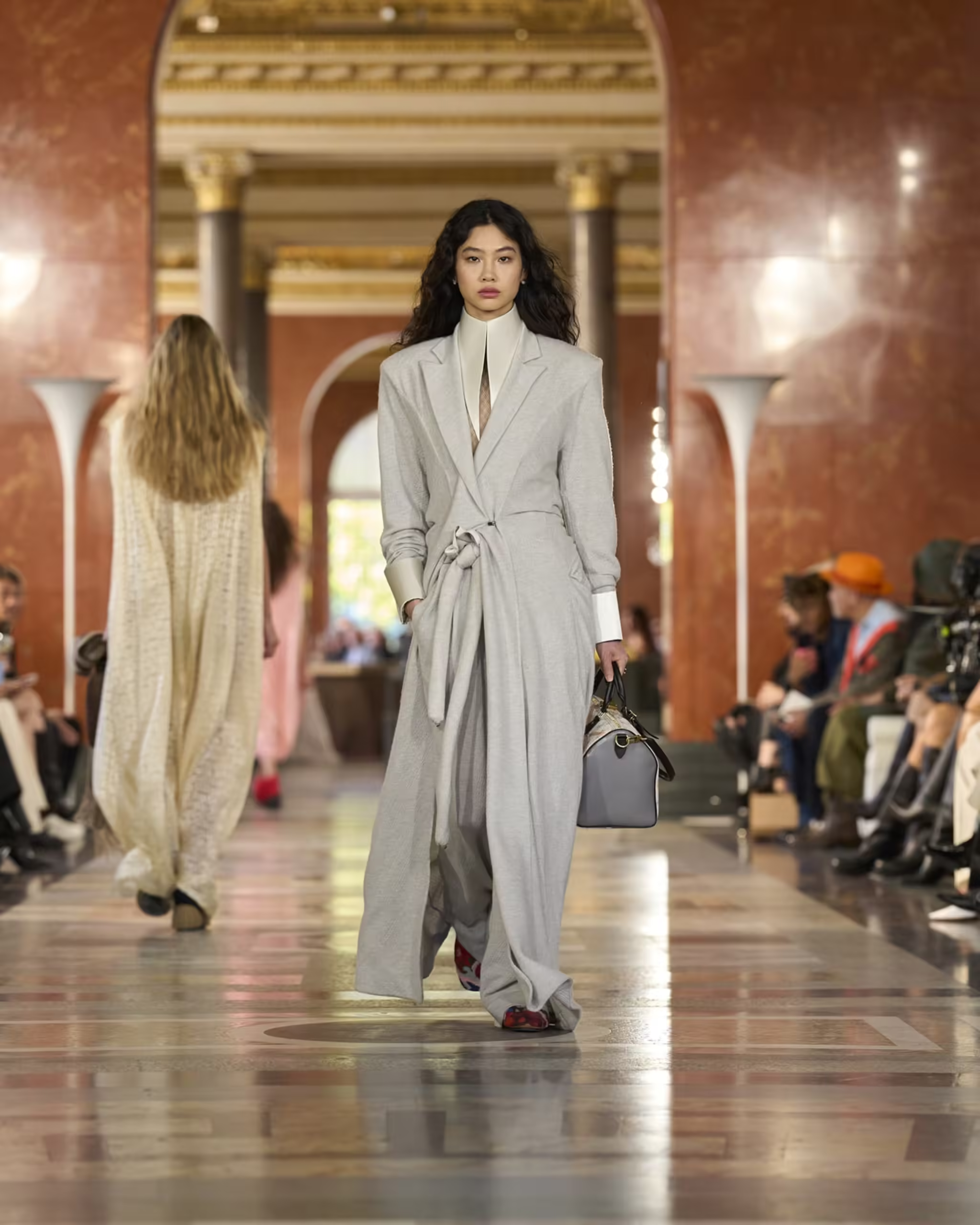
Spring/Summer 2026 doesn’t completely leave Avignon behind. Instead, it reframes some of the same visual ideas from another perspective. For the next runway, Louis Vuitton moved from the monumental Gothic setting of the Palais des Papes to the apartments of Anne of Austria inside the Louvre. Fortress walls became intimate interiors, ceremonial courtyards gave way to private rooms, and the emotional language of the collection softened without abandoning the ideas that came before. Ghesquière described Spring/Summer 2026 as an ode to intimacy — a collection built around the idea of the indoor wardrobe, where home becomes a sanctuary of freedom, imagination and self-expression.
The shift is immediate. Rather than replacing Cruise 2026 with something entirely different, the Louvre collection reframes it. Familiar creative instincts remain visible, but they exist within a quieter, more personal world. Structure becomes lighter, fabrics move differently and embellishment loses its theatrical weight without disappearing altogether.

WHEN THE ARMOUR BECOMES LIGHT
The strongest connection between the two collections isn’t found in identical garments. It’s found in transformation. In Avignon, silver behaves like armour. Metallic bodices feel rigid and architectural, creating silhouettes that appear protective and almost untouchable. Clothing becomes structure, presence and performance.
Inside the Louvre, that same visual language returns in another form. The armour hasn’t disappeared — it has dissolved into something lighter. Silver becomes liquid satin, reflective fabrics move like water, and sculptural construction gives way to flowing drapery. The material remains familiar, but its emotional purpose changes completely.
The metal remains. What changes is what it represents. Protection becomes presence. Structure becomes movement. Performance becomes intimacy. For example, sculptural shoulders appear in both collections, but they communicate something entirely different. In Avignon, they feel ceremonial and commanding; inside the Louvre, they become elegant rather than imposing. Reflective embellishment undergoes the same transformation. Under the dramatic lighting of the Palais des Papes, metallic details create spectacle. Inside the Louvre, those same reflective qualities feel intimate, delicate and quietly luxurious.
If Avignon asks how clothing transforms us when we are being watched, the Louvre asks who we become when we return to ourselves. That contrast quietly reshapes both collections. Cruise 2026 is outward-facing, dramatic and performative. Spring/Summer 2026 is inward-looking, fluid and intimate. One collection constructs protection; the other loosens it.
THEN WE CAME NEW YORK

For Louis Vuitton’s next collection, presented inside The Frick Collection in New York, Ghesquière entered a completely different world. The medieval grandeur of Avignon and the intimate interiors of the Louvre gave way to something faster, younger and more distinctly urban.
Louis Vuitton described the collection as a sartorial exchange between Paris and New York, bringing French savoir-faire into contact with different eras of New York’s cultural identity. Uptown elegance met Downtown energy; tailoring met denim; the refined interiors of the Frick collided with the visual language of contemporary New York. References to Keith Haring further shifted the collection towards a culture defined by movement, youth and artistic freedom.


And it feels more like a new channel entirely — a different rhythm, a different atmosphere, a different set of possibilities. New York introduces another kind of energy — one built around movement, youth, cultural collision and changing identities. If Avignon gave us a collection that was later transformed into the intimacy of Spring/Summer 2026, what happens when this new New York energy enters its next chapter? Can a collection built around movement, cultural collision and changing identities undergo its own transformation?
We could try to guess what the next collection will look like, or where Ghesquière might choose to present it. But we are not going to do that. We’ll leave that question open and give Nicolas Ghesquière the chance to surprise us and impress us once again.


You must be logged in to post a comment.